
The Process Is the Practice: Designing Grantmaking with Dignity
What The Wild Seed Taught us about building equitable grantmaking.
“What does it look like to center dignity in a grantmaking process?”
That’s the question we’ve found ourselves returning to since The Wild Seed Collective’s second annual grantee retreat this June. Throughout the day and in the weeks that followed people pulled us aside to not just talk about the retreat, but the process. Grantees, applicants, reviewers, partners, and funders shared how intentional everything felt: the application, the review process, the communications, the retreat itself, even the way we engaged founders who didn’t receive funding.
One grantee wrote to us afterward: “You created more than an event. You created a safe space where women entrepreneurs could show up authentically, celebrate one another, share challenges openly, and learn from a community that genuinely wants to see each other succeed.”
Another grantee reflected on the fact that our grant application launched alongside a free grant-writing workshop and simply asked: “Who does that?”
We do. Because dignity isn’t something you add to a grantmaking process after it’s designed. It has to be built in from the beginning.
As The Wild Seed Collective prepares to sunset in June 2027, we are reflecting on what this work has taught us — not just about supporting entrepreneurs, but about designing systems that reflect our values.
The Collective and Its Backbone
The Wild Seed Collective is an informal collective we co-founded to nurture small businesses rooted in community — predominantly Black women and women of color founders building in South Los Angeles and beyond. It has no legal designation, no staff of its own, and no 990.
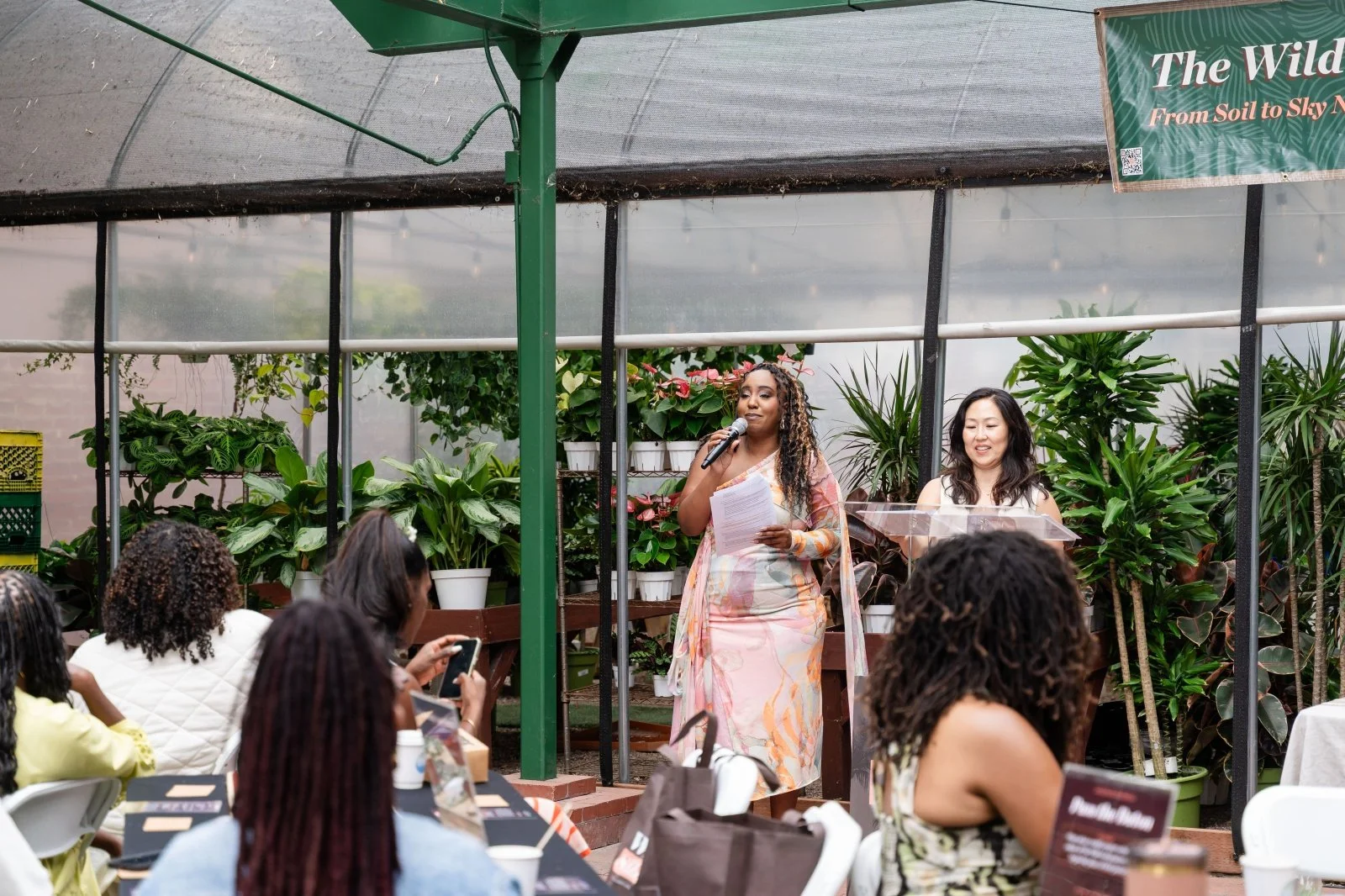
Fractal Strategies Co-Founders Breanna Hawkins and Debbie Sheen address the second cohort of grantees at The Wild Seed annual retreat in June. Photo by K. Gill Photo.
From the beginning, it was meant to be time-bound with the purpose of moving meaningful resources, strengthening relationships, and concluding with intention. Over three years, The Wild Seed reviewed nearly 200 applications, awarded grants to 25 businesses, distributed emergency funding to nearly 40 additional founders, and cultivated a network of more than 150 entrepreneurs who participated in workshops, technical assistance, or funding opportunities.
“You created more than an event. You created a safe space where women entrepreneurs could show up authentically, celebrate one another, share challenges openly, and learn from a community that genuinely wants to see each other succeed.”
Behind that work was intentional partnership. Fractal Strategies served as the backbone organization, leading the design and implementation of the grantmaking process — from the application and tiered funding model to reviewer recruitment, equity-grounded scoring rubrics, participatory review, retreat facilitation, and day-to-day operations. Our partners at Morganite Writing Company delivered technical assistance that helped founders strengthen their proposals while also documenting the initiative’s impact. Our partners at Blacklight Imaging shaped The Wild Seed’s communications, storytelling, and visual identity, ensuring the work was experienced as thoughtfully as it was designed.
The Wild Seed was never the work of one organization. It was a shared practice built by multiple partners around a common set of values. When The Wild Seed concludes next year, the grants will end and the collective will close. But its practices and principles will continue to shape how Fractal partners with foundations, government agencies, nonprofits, and intermediaries seeking to align grantmaking with their values.
Our Design Principle
The founders participating in The Wild Seed invest in community every day. They employ neighbors, mentor young people, create gathering spaces, preserve culture, and reinvest in the places they call home.
Many have also experienced funding processes that require extraordinary vulnerability while offering very little transparency, reciprocity, or respect in return. As women of color founders ourselves, we know that experience firsthand.
So when we designed The Wild Seed’s grantmaking process, we began with a simple principle:
The process itself should reflect the values we hold and model how we believe people should be treated. Not as applicants to be screened, but as builders worthy of investment.
We know no grantmaking process is perfect. Every funding decision involves difficult tradeoffs, finite resources, and applicants who leave disappointed. But imperfection does not excuse carelessness. Instead, it calls for greater intention.
Designing for Dignity
That principle shaped every design decision we made.
We shared decision-making power with the community.
For our third and final grant round, The Wild Seed reviewed nearly 70 applications through a participatory process that brought multiple perspectives to the table. Twenty-four finalists advanced to a reviewer cohort composed of former Wild Seed grantees, small business owners, institutional funders, and practitioners with deep experience supporting entrepreneurs.
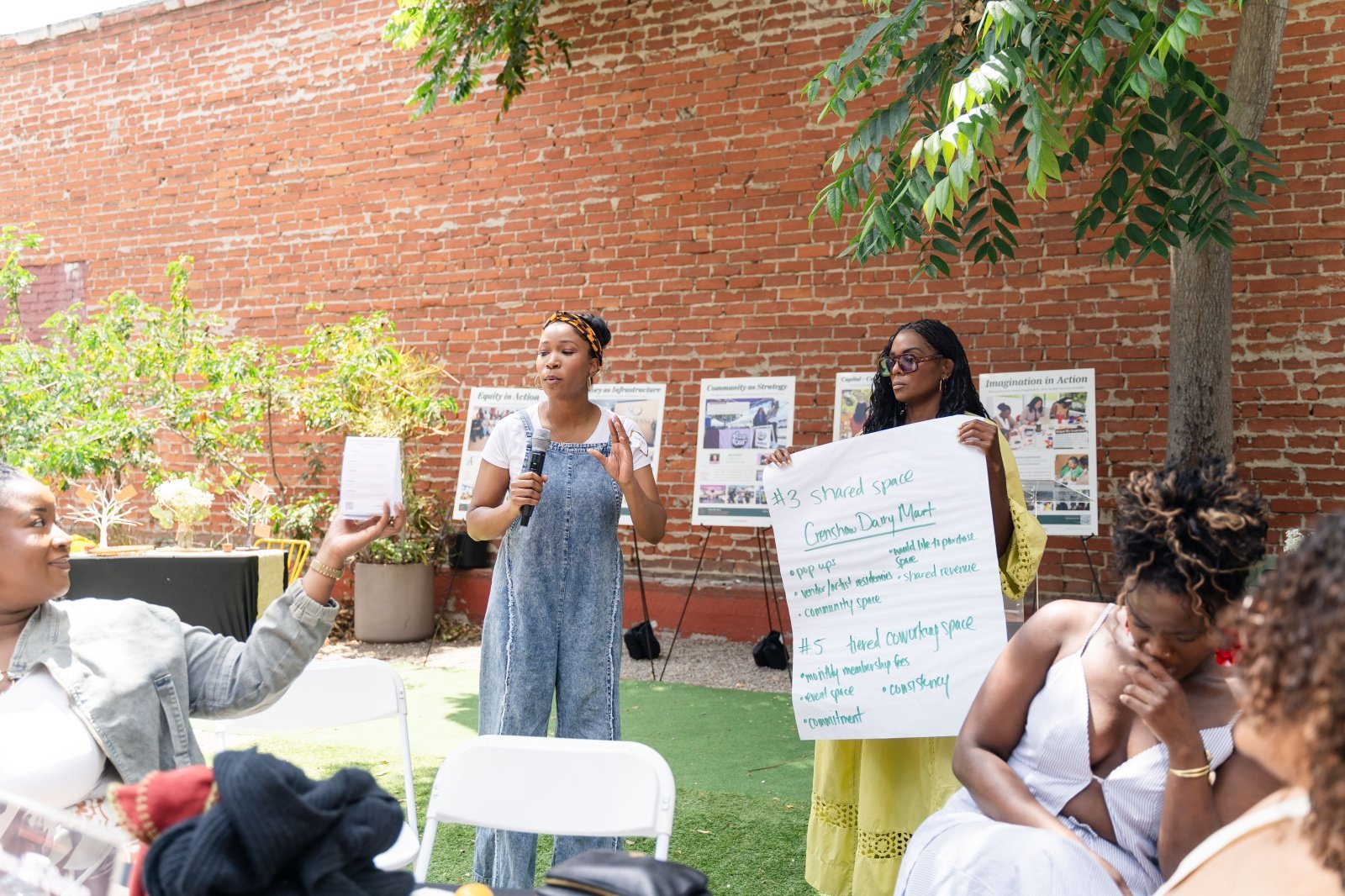
The Wild Seed participants engage in workshops and discussion at the annual cohort retreat in June. Image by K. Gill photo.
Community members held real decision-making power in this process. Too often, grantmaking is removed from the communities it intends to serve. We wanted the people closest to the work to help shape where resources flowed. Community wisdom belongs at the center of the process.
We invested in the people making decisions.
Participatory review only works if people are equipped and supported to do it well.
“Every grantmaking process can make a difference. It can communicate scarcity or possibility, reinforce hierarchy or cultivate partnership, and leave people feeling screened or invested in. The dollars matter, but so does the experience of pursuing them. ”
Every reviewer participated in a training designed by Fractal that explored not only what to evaluate, but how to evaluate it through an equity lens. We talked about common biases that often show up in grant review and how lived experience can strengthen a proposal.
For example, a handwritten application that clearly communicates a compelling vision shouldn’t be disadvantaged simply because another applicant had access to professional grant-writing support. Formality is not the same thing as readiness.
We also compensated every reviewer for their time. Community expertise is expertise. If we believe people’s lived experience has value, our processes should reflect that value. Participation should never require financial sacrifice.
We based our evaluation on consistency – not chance.
Grantmaking involves difficult decisions, but those decisions shouldn’t hinge on whether an application happened to land in front of one reviewer on one particular afternoon. Every application received multiple independent reviews before final funding recommendations were made.
We also developed separate scoring rubrics for each funding tier because we weren’t looking for the same things from every business. An entrepreneur seeking a $3,000 early-stage grant shouldn’t be evaluated using the same expectations as someone applying for $20,000 to scale an established enterprise. Meeting people where they are requires designing systems that recognize where they are.
We invested before making decisions.
One of the most common questions applicants ask is, “What are you looking for?” Rather than expecting entrepreneurs to figure that out on their own, we decided to make the process more transparent before applications even opened.
With our partners at Morganite Writing Company, we offered free grant-writing workshops that were open to the community — not just prospective applicants. Thirty-five entrepreneurs participated across two sessions, learning how to identify funding opportunities, build realistic budgets, and communicate the impact of their work.
Our goal wasn’t simply to strengthen applications for The Wild Seed but to strengthen entrepreneurs’ ability to compete for funding anywhere. Capacity building shouldn’t begin after funding decisions are made. It can be woven into the application process itself.
We designed for the people we couldn’t fund.
Disappointment is part of any grantmaking process. No matter how thoughtfully resources are allocated, there will always be more worthy applicants than available dollars. We didn’t want a funding decision to become the end of a relationship.
Every entrepreneur who wasn’t selected was invited to individual office hours where we discussed their application, talked through feedback, and explored next steps for their business. These conversations honored the time, vulnerability, and hope that every founder invested in applying. With intentional design, a “no” became the start of a different kind of relationship.
We designed spaces for connection, not just celebration.
Community is infrastructure. Our annual Grantee Retreat wasn’t designed as an awards ceremony or a networking event. It was a space where founders could build relationships with one another, engage directly with funders and ecosystem partners, and collectively imagine what might be possible beyond individual businesses.
The “Power Seat” panel invited entrepreneurs to ask candid questions of capital-access experts and philanthropic leaders. The “Co-Lab” sessions created space for founders to identify opportunities to collaborate, share resources, and imagine what they could build together. Again and again, participants told us that these conversations were just as valuable as the funding itself.
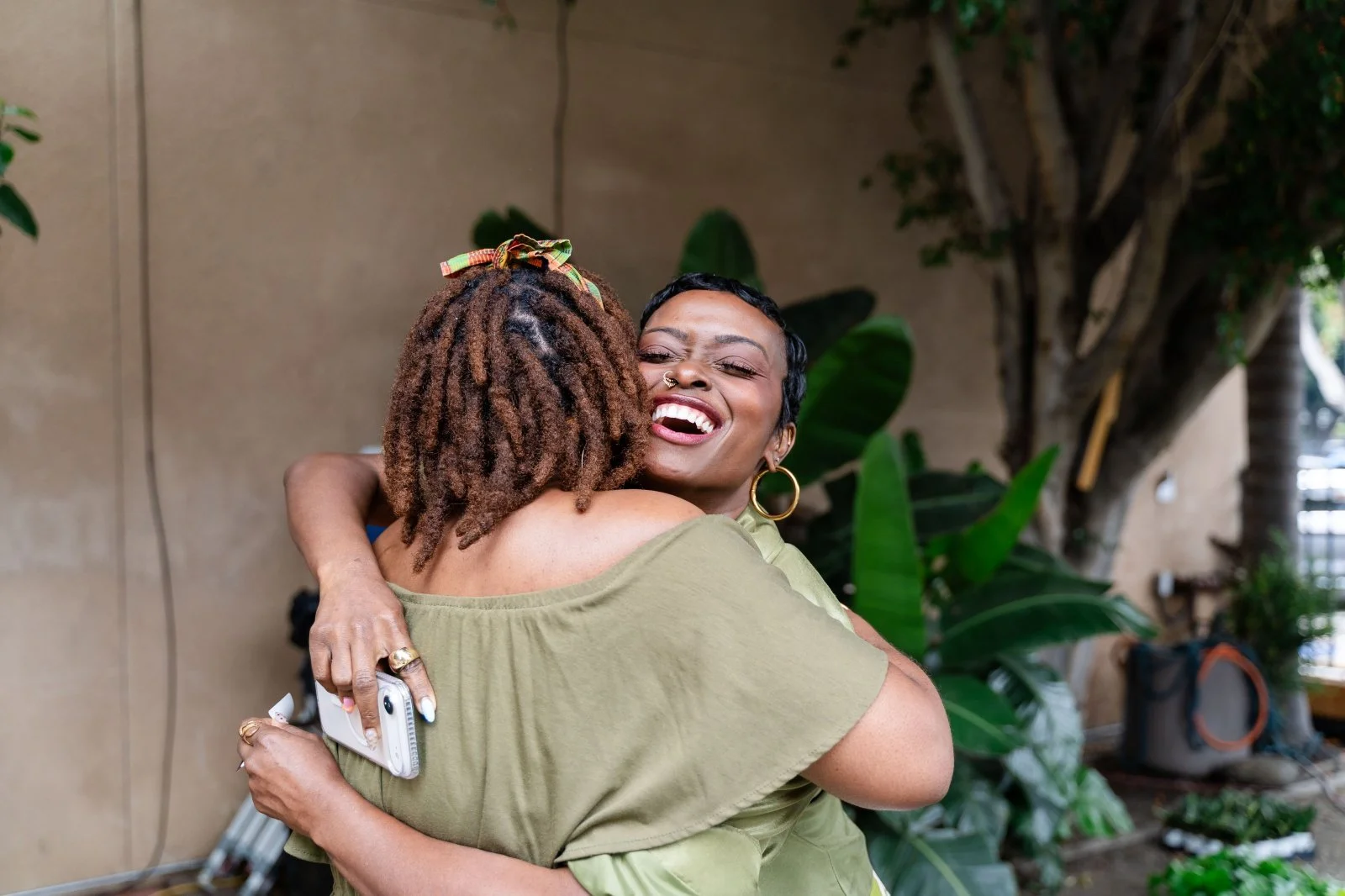
Grantees at the second The Wild Seed cohort retreat. Image by K. Gill Photo.
We believe one of philanthropy’s most overlooked roles is cultivating the relationships that allow communities to continue creating value long after grant dollars have been spent. That was always our hope for The Wild Seed: Not simply that we would fund businesses, but that we would help cultivate the conditions for something larger to take root. That the relationships built through this work would continue to grow long after our formal role ended.
“The Wild Seed was proof that the most meaningful outcomes of philanthropy often can’t be measured when the grant is awarded. They emerge later — in the unplanned collaborations, the opportunities not brokered, and the community that keeps growing after the funding ends.”
Since the retreat, founders have been organizing gatherings on their own — meeting for coffee, visiting one another’s businesses, making introductions, sharing opportunities, and continuing to imagine what’s possible together. Those moments aren’t part of our workplan or grant requirements. They’re evidence that something deeper was planted.
In many ways, that’s the measure of success we care about most. Our goal with The Wild Seed was to plant seeds that developed strong enough roots to keep growing beyond our efforts.
Because that’s what healthy ecosystems do. They don’t depend on a single funder, facilitator, or intermediary. They cultivate the conditions for people to find and invest in one another, and continue building long after the initial investment.
The Wild Seed was proof that the most meaningful outcomes of philanthropy often can’t be measured when the grant is awarded. They emerge later — in the unplanned collaborations, the opportunities not brokered, and the community that keeps growing after the funding ends.
None of these decisions happened by accident.
Every design decision answers a question. The question we kept asking was: “If this applicant isn’t funded, what do we still want them to leave with?”
Taken individually, each of our design decisions may seem relatively simple: Participatory review. Paid reviewers. Multiple readers. Transparent criteria. Grant-writing workshops. Office hours. Thoughtfully facilitated gatherings.
None required extraordinary resources. Together, however, they created something much larger than the sum of their parts. They communicated a different set of expectations about what grantmaking can be: That applicants deserve transparency. Community expertise belongs in decision-making. Learning shouldn’t be reserved for grantees. Relationships matter as much as transactions. And dignity isn’t an outcome of a well-designed process — it’s one of the design criteria.
The Work Continues
The Wild Seed will plant its last seed in June 2027. We’ll celebrate what it made possible, and we’ll grieve its ending. In the meantime, we hope more institutions begin asking different questions about how they move resources.

Because every grantmaking process can make a difference. It can communicate scarcity or possibility, reinforce hierarchy or cultivate partnership, and leave people feeling screened or invested in. The dollars matter, but so does the experience of pursuing them. At Fractal Strategies, we believe both deserve intentional design. We believe that’s the work.
